A fake receipt used to take a photocopier, a steady hand and a bad attitude. Now it takes one sentence typed into an AI image tool, and the result has a real restaurant's name, itemized lines, a tax total and the creases of paper that spent a week in someone's pocket.
For a small business, AI fake receipts show up in staff expense claims, in subcontractors' bills and in refund requests. They're usually small, around $100, because small claims get approved without a second look. And they're getting harder to catch by eye: in one 2026 study, people did worse at spotting AI receipts than AI models did.
The good news is that most fakes fail simple checks that don't depend on how the receipt looks. Does the math add up? Does it match a card or bank statement? Does the shop exist? None of them takes more than a minute.
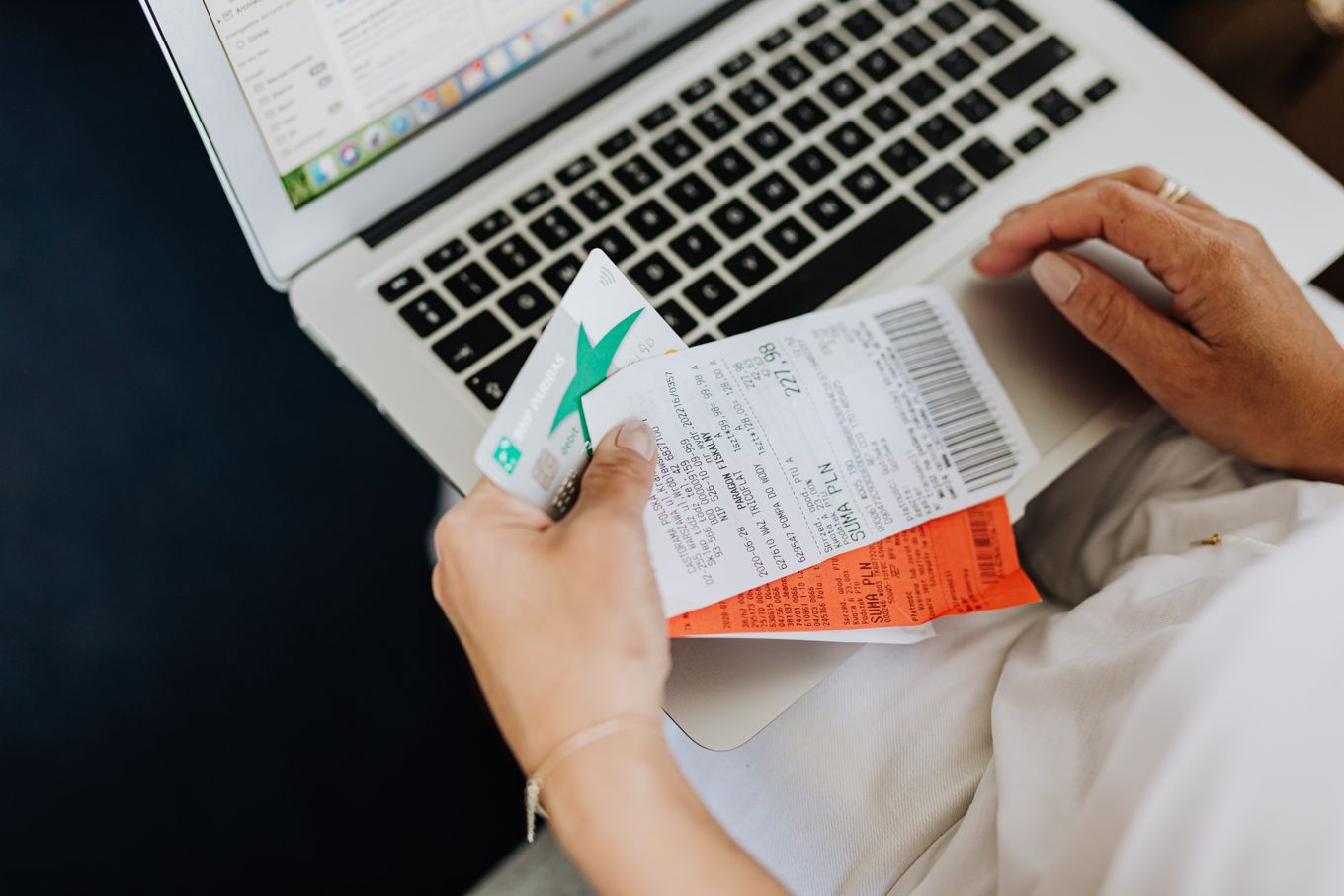
Photo by Kaboompics.com on Pexels
Can AI make fake receipts?
Yes, easily. When ChatGPT's image generator got a major upgrade in March 2025, people quickly showed it could produce convincing restaurant receipts. TechCrunch asked OpenAI why it allowed that at all. A spokesperson said every image ChatGPT makes carries metadata showing where it came from, that OpenAI acts when people break its usage policies, and that the goal is creative freedom, with fake receipts useful for things like teaching financial literacy.
The tools have improved since. The ICAEW, the UK's chartered accountants' body, warned in November 2025 that with the right prompt, AI can reproduce the texture of thermal paper, simulated creases and even the blur of a phone camera. In other words, the details people used to check by eye are exactly the ones AI now gets right.
How common are AI fake receipts?
Two sets of numbers get quoted, and they measure different things.
The first comes from AppZen, which sells expense-audit software. According to Accounting Today's report on its data, AI-generated receipts made up 0% of the fake receipts AppZen flagged in March 2025 and 70.8% by mid-May 2026: 1,471 receipts from 745 employees at 174 companies. The AI fakes averaged about $100 each, against $182 for older template-based fakes. That doesn't mean expense fraud grew 70-fold. It means that when a fake gets caught now, it's almost always made with AI.
The second is a survey. Emburse, another expense software company, had 1,000 US and 1,000 UK workers surveyed in May 2026. Four in ten of the US workers said they had used AI to create a fake receipt for a business expense: 19% to invent a purchase, 15% to inflate one, and 6% to replace a lost receipt for a real purchase. Both companies sell tools to catch this, so read the figures as a sign of direction rather than a precise rate.
How to spot a fake receipt
Looking harder at the image is the weakest check. Each of these works whether the fake came from AI, a template or a photo editor.
1. Check the math
This is the most useful check, and it costs nothing. A 2026 study of 1,235 receipts made with GPT-4o found that the most common giveaway was arithmetic that doesn't add up: line items that don't match the subtotal, or tax that isn't the stated percentage. People shown the receipts missed those errors, and AI models checking them caught more, because a wrong subtotal is invisible until someone adds it up. AI can fake the crumpled paper, the coffee stain and the faded ink, and then still get 8% of $42 wrong.
So add up the lines, and check the tax. Our percentage calculator does both directions: enter the total and the tax rate to see the pre-tax amount, or work out what 8% of the subtotal should be. If the receipt says $3.40 and the right answer is $3.36, look closer.
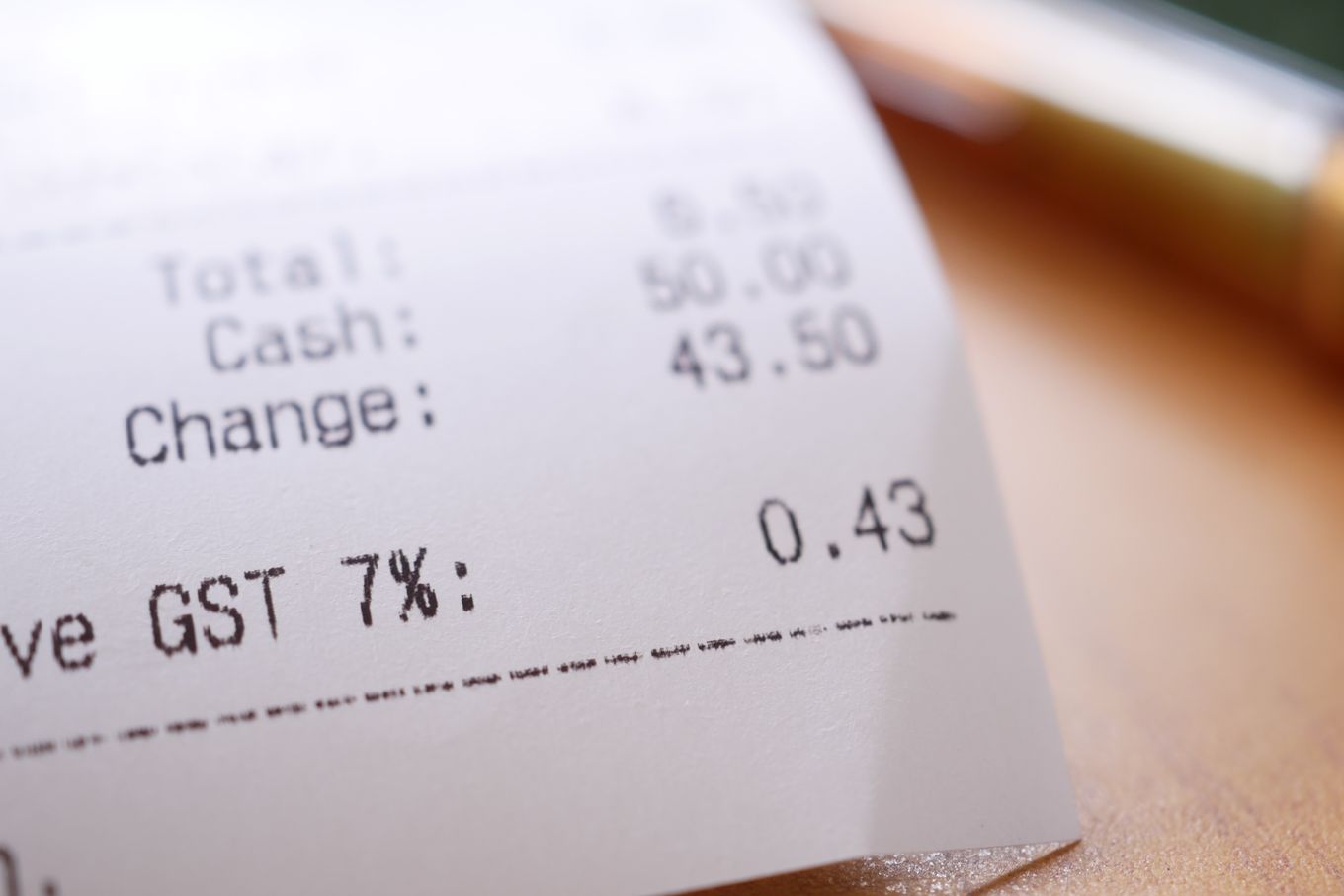
Photo by Towfiqu barbhuiya on Pexels
2. Match it to a card or bank statement
A real purchase leaves a trace somewhere else. If the expense went on a company card, the transaction should be there with the same amount and date. If it went on a personal card, ask for the statement line. A receipt with no matching payment is the clearest red flag there is.
3. Check that the business exists
Look up the restaurant, hotel or shop. Does the address exist, and is it the kind of place that sells what's on the receipt? Fakes often borrow a real brand but get the branch, the phone number or the opening hours wrong. If the receipt shows a tax or registration number, check it against the official register.
4. Ask for the original, not a photo
Most purchases now come with an email receipt, an app record or a PDF invoice. Ask for that instead of a photo of a paper slip. It's much harder to fake an email in someone's inbox than a picture.
5. Look for patterns, not just one receipt
Watch for several small claims from the same person, round numbers, receipts that always land just under your approval limit, and the same shop showing up in places the person wasn't. One fake is hard to see. Ten from the same source usually aren't.
6. Treat "too perfect" as a clue, and metadata as a bonus
Real receipts are faded, folded and crooked. An employment law blog described one online case where people spotted an AI receipt because the font and the wear looked too uniform. That's a reason to run the checks above, not proof on its own.
Images made with ChatGPT also carry Content Credentials, a kind of digital label saying where they came from. We found them on the images ChatGPT drew in our QR code test. But OpenAI's own help center says those credentials can be lost through everyday actions such as taking a screenshot. Anyone submitting a fake can photograph or screenshot it first, so a receipt with no AI label proves nothing.
Simple controls for a small business
You don't need fraud software to make fakes much less attractive:
- Pay through company cards wherever you can, so the card statement is the record and the receipt is a backup.
- Lower the "no questions" limit. If anything under $150 goes through unchecked, that's where the $100 fakes will land. Spot-check a few small claims every month.
- Write down the lost-receipt rule. Say what someone should do when they lose a receipt, so recreating one never feels like the easy option. Intent matters, and a clear rule removes the excuse.
- Check subcontractor bills the same way. A supplier invoice should match a quote, a purchase order or work you can see.
Are fake receipts illegal?
Using a fake receipt to get money you aren't owed is fraud, whether that's an expense reimbursement, a refund or a client bill. It's grounds for firing an employee, and depending on where you are and how much is involved, it can also lead to criminal charges.
Using one for taxes adds another layer. In the US, knowingly giving the IRS a document that's false on a material point is a federal crime under 26 U.S. Code § 7207, with a fine of up to $10,000 and up to a year in prison. That's before any tax, interest and penalties on the deduction itself. This is general information, not legal advice.
Lost a real receipt? What to do instead
Six percent of the workers in the Emburse survey said they used AI to replace a lost receipt for a real purchase. It's understandable, and it's still a fake document. There are honest options:
- Ask for a copy. Most shops, hotels and online sellers can resend a receipt or invoice.
- Use your other records. The IRS lists card sales slips, account statements, canceled checks and invoices as supporting documents for business expenses, alongside receipts.
- Write a note with the date, place, amount and business purpose while you still remember them.
- Know the travel rules. For travel, gift and transportation expenses, IRS Publication 463 says you generally don't need a receipt for an expense under $75 (lodging excepted), though you still need a written record.
If you're self-employed, these records are what stand behind every deduction you claim. Our guide to calculating freelance taxes covers what you can deduct and why keeping the paperwork matters. Fake invoices and changed bank details work the same way from the other side, and we cover those in how to spot AI scams.
How we made this: researched and drafted with AI assistance, with any figures checked against their sources and the post reviewed by Hamza before publishing.
Frequently asked questions
Can ChatGPT make a fake receipt?
Yes. ChatGPT's image generator can produce realistic receipts from a text prompt, and OpenAI has said it allows this for uses like teaching financial literacy. Using one to claim money you aren't owed is fraud and breaks OpenAI's usage policies.
Is it illegal to make a fake receipt?
Using one to get money, a refund or a tax deduction is fraud. In the US, knowingly giving the IRS a false document can bring a fine of up to $10,000 and up to a year in prison. Penalties vary by country and case, so speak to a lawyer if you're dealing with one.
How can you tell if a receipt is AI-generated?
Often you can't by looking. Check that the lines and tax add up, match it to a card or bank statement, confirm the business exists, and ask for the email or app receipt instead of a photo. Missing AI metadata proves nothing, because a screenshot removes it.
What should I do if I lose a receipt?
Ask the seller for a copy, keep the card or bank statement showing the payment, and write a short note with the date, place, amount and business reason. Never recreate the receipt with AI, even for a real purchase.