For years, a client who paid you $600 had to send you a tax form. For money paid in 2026, that line moves to $2,000, which makes this the rarest gift in American tax law: less mail.
The 1099 threshold for 2026 is $2,000 for Form 1099-NEC, and over $20,000 in more than 200 transactions for payment apps on Form 1099-K. Both rules decide who gets a form, and neither changes what you owe. If a client pays you $1,500, you get no form and still owe about $212 in self-employment tax, plus income tax.
We read the IRS's instructions and PayPal's tax page for this post on October 30, 2026, and linked them in each section. If you get paid by clients, apps or card, you'll see which form to expect, what to do when none arrives, and what to keep on file.
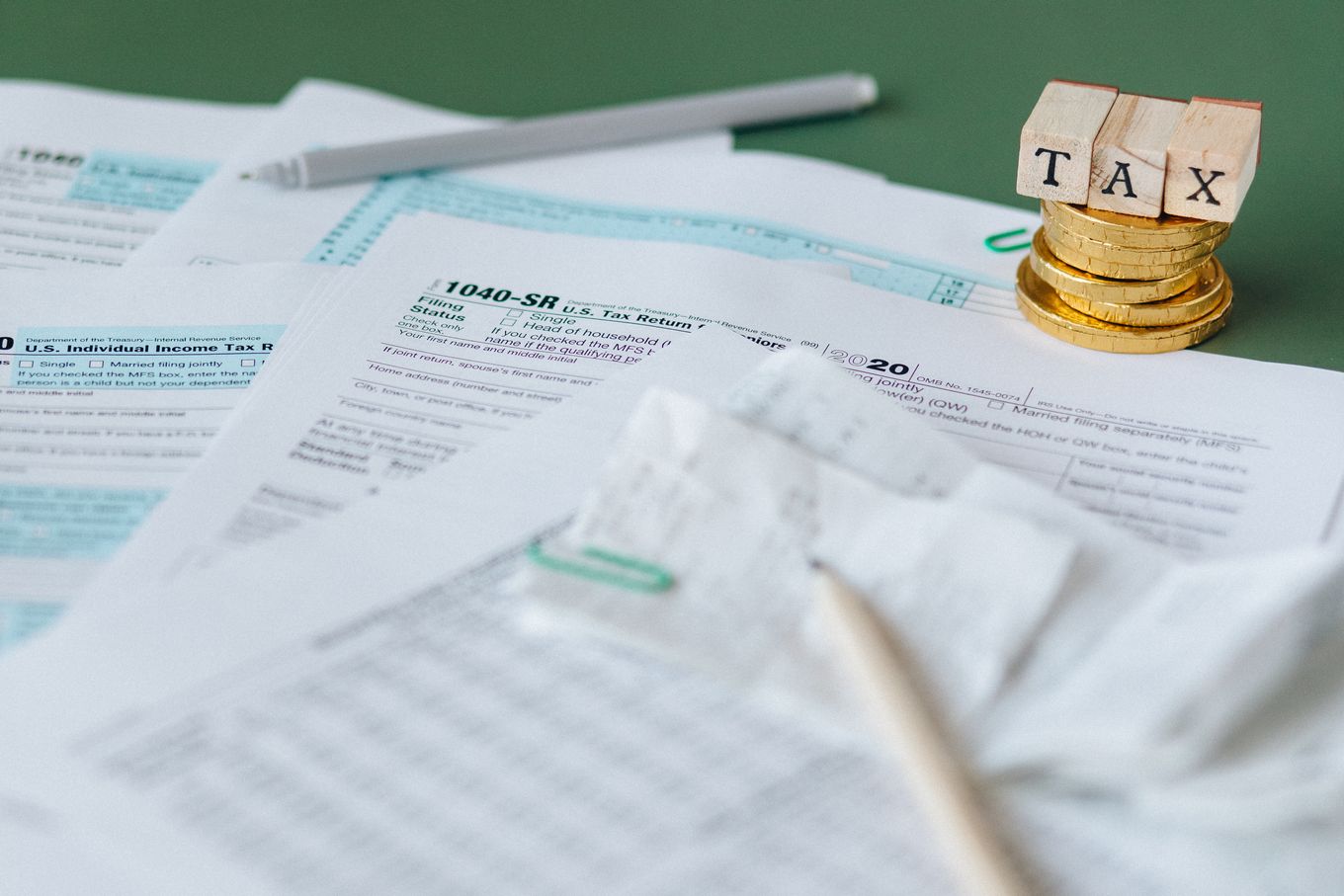
Photo by Nataliya Vaitkevich on Pexels
What is the 1099 threshold for 2026?
There are two main numbers, because two forms cover two ways of getting paid. Form 1099-NEC is what a business client sends when it pays you directly. Form 1099-K is what a payment app, marketplace or card processor sends.
| Form | Who sends it | 2026 threshold |
|---|---|---|
| 1099-NEC | A business that pays you directly for your work | $2,000 or more in the year |
| 1099-K | Payment apps and online marketplaces | Over $20,000 and more than 200 transactions |
| 1099-K | Your card processor, if clients pay you directly by card | Any amount |
The $2,000 figure comes from the IRS instructions for Forms 1099-MISC and 1099-NEC, and it applies per payer. Three clients paying you $1,500 each add up to $4,500 of income and no required forms. Most payment types on Form 1099-MISC moved to $2,000 as well, including rents and prizes.
The app numbers come from the IRS's Form 1099-K page. Both tests have to be met, so $30,000 across 150 payments doesn't require a form. Apps are allowed to send one for less, though. You may still see $600 quoted for payment apps. That was the older plan, and the One Big Beautiful Bill Act reversed it.
When the $2,000 threshold starts
It covers money paid during 2026. The first forms under the new rule go out in early 2027, and they're due to you by January 31. That date falls on a Sunday in 2027, which pushes the deadline to February 1.
Payments from 2025 stayed under the old $600 rule, so a form you got in early 2026 for $800 of work was correct. The first year you'd notice the change is the 2026 tax return you file in spring 2027.
The IRS says the 1099 threshold may be adjusted for inflation starting in 2027. The pages we read don't give a 2027 figure yet, so treat $2,000 as this year's number and check again next year.
Which 1099 will you get?
The way the money reaches you decides the form. The IRS instructions say card payments and payment app transactions go on Form 1099-K and aren't reported on Form 1099-NEC, so a client paying through PayPal has nothing to send you for that payment. Here's how that plays out:
| How you were paid in 2026 | Form you should expect |
|---|---|
| A business client paid $1,500 by check or bank transfer | None required |
| A business client paid $2,000 by check or bank transfer | 1099-NEC |
| A client paid $5,000 through a payment app, and that was all your app income | No 1099-NEC, and no federal 1099-K required |
| Clients paid $30,000 through an app in 250 payments | 1099-K |
| Clients paid $30,000 through an app in 150 payments | No federal 1099-K required, though the app may send one |
| Clients paid you directly by card | 1099-K from your card processor, at any amount |
The IRS lists freelance marketplaces among the platforms that follow the app rule, and you can get a separate form from each one you use. The 1099-NEC rule covers payments made in the course of a business, so a private person hiring you for something personal has no form to file.
If you don't get a 1099, do you have to report the income?
Yes. The IRS says it directly on its gig work page: you must report all income, even if you don't receive any 1099 forms. That answers "do I need to report income under $2,000?" as well. The threshold is a rule for the people paying you. Your own rule is a different number: you have to file a return once your net self-employment earnings reach $400.
Here's what a client under the threshold still costs you in self-employment tax, assuming no expenses against that income. The 15.3% rate and the 92.35% adjustment are the same ones we cover in how to calculate freelance taxes:
Four $1,500 clients, no forms: $6,000 × 0.9235 × 0.153 = $847.77, before income tax
Your business expenses come off first, because the tax applies to profit. That can include things like the AI subscriptions you use for work. To see the whole bill with income tax included, put your numbers into our freelance tax estimator.
State 1099 rules can be lower
The federal number isn't the only one. PayPal's tax page lists five states where it reports at a lower level:
| State | PayPal's 1099-K threshold |
|---|---|
| Maryland, Massachusetts, Vermont, Virginia | $600 in goods and services payments, any number of transactions |
| Illinois | Over $1,000 and four or more transactions |
PayPal warns that states may still be updating these rules, and other platforms may word theirs differently. So if you live in one of these states, a 1099-K for a few thousand dollars doesn't mean anyone made a mistake. We haven't checked state rules for Form 1099-NEC, so ask your state tax agency if a client tells you it has to file at a lower amount.
What to track when fewer forms arrive
A 1099 used to double as a rough check on your own records. With fewer of them coming, your records are the only full list of what you earned, and the IRS says to use your own receipts for any payment that no form reports.

Photo by cottonbro studio on Pexels
- Every payment, by client. Date, amount, who paid and how. A numbered invoice for each job makes this list easy to rebuild.
- A running total per client. It shows when someone crosses $2,000, so you know whether to expect a form in January.
- Your platform fees. The amount on a 1099-K isn't reduced for fees or refunds. If PayPal keeps $29.90 of a $1,000 payment, the form counts $1,000 and you received $970.10. The IRS says you can deduct those items from the gross amount.
- Your business expenses. Keep the receipts, because the tax falls on what's left after them.
Give clients your tax number when they ask for a Form W-9, even if you expect to stay under $2,000. Under the IRS backup withholding rules, a payer may have to hold back 24% of future payments if you don't give it a correct number.
If a form does arrive for less than the threshold, report that income the same way you would anything else. If a form looks wrong, ask the sender to correct it, and use the IRS's steps for a wrong Form 1099-K where that's the form involved.
How we made this: researched and drafted with AI assistance, with any figures checked against their sources and the post reviewed by Hamza before publishing.
Frequently asked questions
What is the minimum amount for a 1099 in 2026?
For Form 1099-NEC, a business has to report $2,000 or more paid to you in 2026, up from $600. For Form 1099-K, payment apps and marketplaces have to report over $20,000 in more than 200 transactions. Card processors report direct card payments at any amount.
If I don't get a 1099, do I have to report the income?
Yes. The IRS says you must report all income on your tax return, even if you don't receive Forms 1099 from the businesses that pay you. Use your own invoices and receipts to work out the total.
Do I need to report income under $2,000?
Yes, if it's income you earned. The $2,000 only tells a client when to send a form. You have to file a return once your net self-employment earnings reach $400, and that $400 counts all your clients together.
What is the 1099 threshold for 2027?
The IRS says the $2,000 threshold may be adjusted for inflation starting in 2027. The IRS pages we read on October 30, 2026 don't give a 2027 figure, so check the current Form 1099-NEC instructions before relying on one.
What if my client didn't send a 1099?
Check the total first. Under $2,000 in 2026, or paid by card or payment app, the client probably has nothing to send. Either way, report the income from your own records. Forms for 2026 are due by February 1, 2027, so it's worth waiting until then before you ask.
Sources
| Figure | Value | Source |
|---|---|---|
| Form 1099-NEC threshold | $2,000 or more | IRS instructions |
| Form 1099-K, apps and marketplaces | Over $20,000 and more than 200 transactions | IRS Form 1099-K page |
| Filing requirement | $400 net self-employment earnings | IRS gig work page |
| Self-employment tax rate | 15.3% | IRS self-employment tax page |
| Backup withholding | 24% | IRS backup withholding page |
| PayPal state thresholds | $600 or over $1,000 | PayPal tax page |